
Managing projects from enquiry to completion: the Base Architects case study
Base: Architects & Planning run offices in Shrewsbury, Chester and Conwy, and the practice has been growing fast since it was founded in 2003. Growth is a good problem to have, but it exposed a bad one: leads, quotes, project tracking and staff capacity were all being managed across separate spreadsheets.
That setup works for a small practice. It stops working once you’re juggling thousands of residential and commercial projects across three offices. Every new enquiry meant updating multiple sheets by hand. Quoting was manual. Working out who had capacity for a new project meant asking around rather than checking a system. And the senior staff who should have been mentoring junior architects and talking to clients were instead spending their time on admin that a proper system should have handled.
Base needed one platform built around how the practice actually works, not a generic project management tool they’d have to bend their process to fit.
What we built
We built Base a cloud-based platform that follows a project from the first enquiry through to completion, covering:
- Lead-to-project workflow. Client enquiries convert into quotes, and successful quotes convert into live projects, all in one system rather than a handoff between spreadsheets.
- Automated quote generation with smart PDF output, replacing manual document creation.
- Task distribution based on staff workload and expertise, so work gets assigned to the right person automatically rather than by asking around.
- A daily task dashboard, so every member of staff logs in and sees exactly what’s assigned to them, with the supporting documentation attached.
- Capacity planning across the working week, plus holiday requests and approvals, so the practice can see who’s actually available before committing to new work.
- Client-facing progress updates, integrated with Base’s existing email system, so clients get automatic updates without anyone having to write them by hand.
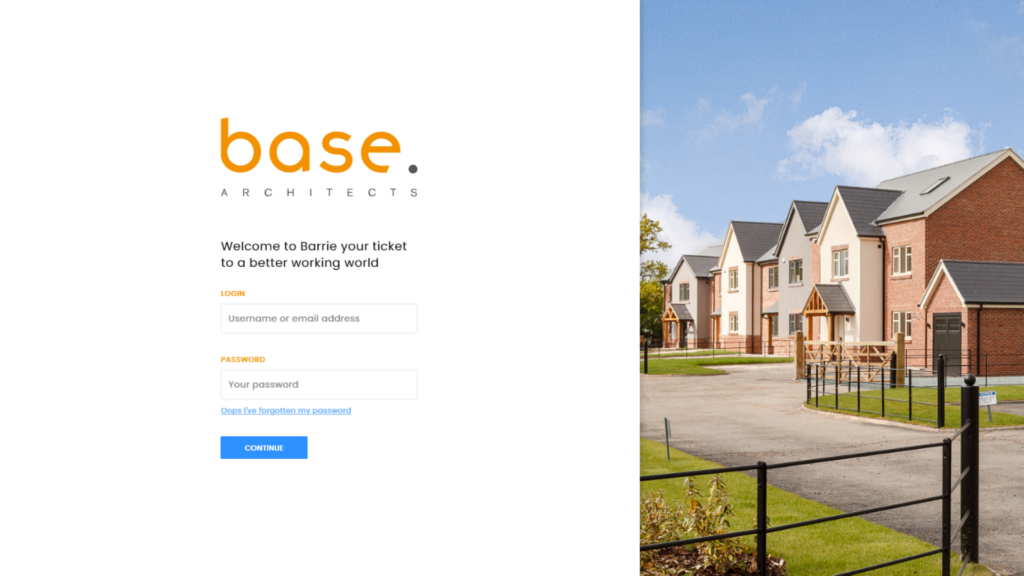
- Base’s own brand and visual identity built throughout the interface, so it feels like part of the practice rather than a bolted-on third-party tool.
The impact
Base director Bryn Jones summed up the difference:
“Shoothill worked tirelessly with Base to understand our business requirements and the new system has really enhanced the day to day operations.”
That’s the outcome we aim for with every custom build: not a system Base had to adapt to, but one built around the way the practice already runs, so it removes admin rather than adding a new layer of it.
Why this matters beyond architecture
Base’s starting point (multiple spreadsheets covering different parts of the same process, senior staff time going to admin instead of clients, no easy way to see capacity across the team) is one we see across construction and housebuilding businesses at a similar stage of growth. It’s the same pattern we cover in our piece on [custom software for construction and housebuilding]: off-the-shelf tools solve part of the problem, but rarely all of it in one place, so the spreadsheets stick around as a workaround.
If any of that sounds familiar, whether you’re an architecture practice, a housebuilder or a modular construction business, the questions to ask are the same ones Base had to answer: how many separate systems (or spreadsheets) are you running to cover what should be one job, and how much senior time is going to admin that a proper system should be handling for you?
Talk to us about your practice or business
We’ve spent over 20 years building software for architects, housebuilders and construction firms across the UK. If your spreadsheets and systems aren’t scaling with the business the way Base’s weren’t, get in touch and we’ll talk through what fits.